Thursday, January 5, 2012

England as Religious Haven, and its Influence on Economic Growth

     Foreigners with special skills, and those who were masters at their trades had been encouraged by the monarchy to settle in England since the Middle Ages. For instance, Queen Phillipa of Hainault notably sponsored Flemish weavers and wool merchants to take up residence in her adopted country. Foreign tradesmen sometimes assimilated well into their new communities, but other times they were seen as a threat by the native English and their businesses were boycotted in hopes that they would suffer financially and leave the country.

A detail from a 14th century illustration of Philippa of Hainault at her coronation. Picture acquired through Wikimedia Commons Image public domain.
 
     Tudor and Elizabethan England brought new reasons for immigrants from the Continent to settle in England, and also for Englishmen to flee persecution from their own government. This was all due to a succession of regime changes that affected religious tolerance. It all started with Henry VIII’s ever changing mind on matters of religion, and then the differing opinions of his three children. Depending on the given month and year, either Catholics or Protestants had reason to worry. In King Edward’s brief reign, many reformers eager to help establish a new Protestant kingdom flocked to England, only to flee again in fear during the reign of Queen Mary.
The atrocities suffered under Queen Mary's reign were still a very recent memory. This woodcut from Foxe's Book of Martyrs shows the burning of the elderly Archbishop Thomas Cranmer. Picture acquired through Wikimedia Commons Image public domain.Picture acquired through Wikimedia Commons Image public domain.

     Queen Elizabeth established herself as someone who “wish(ed) not to open windows into men’s souls.” While Elizabeth herself was a Protestant, and upheld the Church of England that her father had established, her religious policy was much more moderate than either of her siblings, and England saw itself filled with both faiths again. Elizabeth’s own advisors were a mix of Catholic and Protestant, with some even leaning toward Puritanism, which Elizabeth herself was wary of. 

     From the 1560’s onward, England accepted Protestant refugee’s of the religious wars that were tearing apart Spain, Italy, France, Germany, and the Netherlands. In 1553, the French Ambassador supposed that there were 15,000 French, Dutch and German Protestants in the City of London alone. King Philip of Spain’s ambassador would report in 1560 that the Flemish Protestants in England came to a grand total of 10,000. By 1568, between 7 and 8 percent of the people dwelling in London and its surrounding borough’s were refugee’s and tradesmen from France and the Netherlands.

     One of the many tasks of the Privy Council was to find towns where these immigrant families could be settled peacefully. For instance, in 1565, the Privy Council sent 30 immigrant families to Nowich, and by 1579, they had grown to represent 1/3 of the city’s population.


     While there were periods in Elizabeth’s reign where native born citizens took issue with prosperous immigrant tradesmen, (For instance, the Flemish wool merchants mentioned in the first paragraph were extremely affluent by the 16th century, and many of their competitors petitioned against them) for the most part, these immigrants were a vital component to the diverse, robust and steadily growing economy in England, an economy that would enable England to catch up and compete with the other Continental superpowers; England’s economy in the latter half of the 16th century is undoubtedly one of Elizabeth’s greatest achievements.

Sources: 

Statistics taken from D.M.Palliser's The Age of Elizabeth: England Under the Later Tudor's. Print.

Friday, December 30, 2011

On this Day in Elizabethan History: Dec 30th & 31st

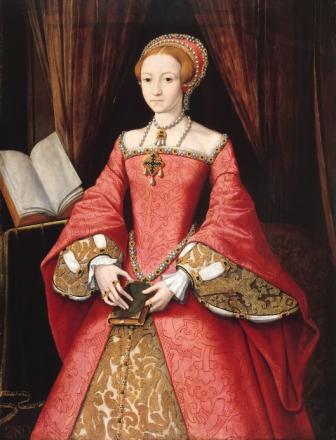
On December 30th, 1568, Roger Ascham, renowned Cambridge scholar, lecturer and author, and most notably the tutor of Princess Elizabeth Tudor, died. Ascham maintained a lengthy correspondence with the young princess before he was appointed as her tutor in the household of Queen Dowager Katherine Parr. Ascham's copious praise of Elizabeth's academic abilities to his peers and superiors is genuine and showed what faith Ascham had in his pupil's potential. (

To read more about Ascham and Elizabeth's relationship, and her rigorous studies under his advisement, please see my article An Education: The Shaping of Elizabeth I Through Childhood Events and Academic Pursuits, published exclusively at On the Tudor Trail.


Portrait of Elizabeth Tudor c. 1546,  attributed to William Scrots. In the Royal Collection, residing in Windsor Castle. Picture acquired through Wikimedia Commons. Image public domain.

To give you an idea of the caliber of man Ascham was, even outside of his relationship with Elizabeth I, I would like to share with you a brief episode from his life, five years before he died, that I came across in D.M. Palliser's "The Age of Elizabeth: England under the later Tudor's".I have paraphrased it, below:

Roger Ascham was in attendance at a dinner hosted by William Cecil in 1563. The conversation turned to the distressing news that some boys from Eton College had run away from school because they feared the brutal beatings of their teachers.
Some of the dinner guests favored the longstanding practice of corporal punishment for pupils, but Cecil, among others agreed with the progressive Ascham that England should transition to a gentler form of education; an education that would be no less academically challenging, but more governed by positive reinforcement than negative. One of Ascham's greatest works, The Schoolmaster, first published posthumously in 1570, concerned the matter of Elizabethan education.

~BONUS~
On this Day in Elizabethan History...December 31st

Portrait of Robert Dudley, Earl of Leicester c. 1564. Picture acquired through Wikimedia Commons. Image public domain.

And, in recognition of New Years, I will also share with you a very special gift that Elizabeth received from her beloved Earl of Leicester for the New Years celebrations of 1585:

 "First, a sable skynne, the hedd and four feete of gold, fully garnished with dyamonds and rubyes of sundry sorts."-from Progresses of Queen Elizabeth by John Nichols

A Happy New Year to all my BeingBess readers! Your support of this site galvanizes me to keep doing what I am doing; I am so happy to share Elizabeth and her remarkable story with many people worldwide who love her as I do.
You truly are my "Pastyme with goode companye"
I wish for health, happiness, and safety for you and yours in 2012...and of course, much more Queen Elizabeth I in the coming year!

Sources:

Palliser, D.M. The Age of Elizabeth: England under the later Tudor's. Print.

Nichols, John. Progresses of Queen Elizabeth. Electronic.


Wednesday, December 28, 2011

Elizabethan Quote of the Day: An Excerpt From "The Faerie Queen"

Today I would like to share with you an excerpt from one of the most famous literary works composed to honor Queen Elizabeth I, Edmund Spenser's The Faerie Queene. (Note: some of the contemporary spelling had been retained to preserve the authenticity of the verse)

A picture of Queen Elizabeth receiving foreign ambassadors, by Elizabeth's female court painter Leevina Teerlinc. In my opinion, Teerlinc has an Edward Gorey like style! The practice of painting the walls in the court rooms is sumptuously brought to life in the Helen Mirren HBO miniseries Elizabeth I.
"High above all a cloth of State was spred,
And a rich throne, as bright as sunny day,
On whiche sate most brave embellished
With  royall robes and gorgeous array,
A mayden queene, that shone as Titans ray,
In glistring gold, and peerelesse pretious stones
Yet her bright blazing beautie did assay
To dim the brightnesse of her glorius throne,
As envying her selfe, that too exceeding shone."

Sunday, December 25, 2011

On This Day in Elizabethan History: Queen Elizabeth's first Christmas as Queen.

First let me say, Happy Christmas to all who celebrate the holiday! I hope the new year finds all of my readers (of any faith) and their loved ones happy and healthy.

Today I would like to share with you a pivotal event that happened the very first Christmas after Elizabeth had been named Queen of England, after the death of her sister Mary.

On Christmas Day, 1558, Elizabeth gave her subjects her first real hint as to her religious inclinations and the religious traditions she would observe as queen.

Normally, the Archbishop of Canterbury would have held a mass on Christmas morning for the reigning monarch and their court, but this position was now vacant since Archbishop Reginald Pole had died the same day as Queen Mary. This was fitting, as Reginald was one of Mary Tudor's lifelong supporters, like his mother Margaret Pole before him; his perfectly timed passing suggested that he was following his queen from this life into the next.

A detail from a portrait of Cardinal Reginald Pole. Picture acquired through Wikimedia Commons. Image public domain.

Many of Mary's former clergy were wary of Elizabeth's religious beliefs. While she had never made any secret of her Protestant faith, it remained to be seen if her beliefs would lean more toward the Puritanical, like her brother's regime, or remain more moderate. Perhaps they feared, she would inhabit the same martyr like quality her sister had for her own faith, and exact revenge on the Catholic ministers who had sentenced Protestant "heretics" to death. Of course, none of the Catholic clergy and politicians fears would come to pass, but in the early months of Elizabeth's reign, they held their breath as they waited for the queen to shown her hand.

After the Archbishop of York boldly announced that he would not crown a "heretic" as  queen, there was only one clergyman willing to host a Christmas Day service for Elizabeth. He was Owen Oglethorpe, the Bishop of Carlisle.

Elizabeth, like her father, was prepared to maintain some of the "pomp & circumstance" of a Catholic service in an Anglican-style mass, but there was one element of the service she would not waver on, she told Oglethorpe in a message...

The Elevation of the Host was to be eliminated, since it implied the miracle of transubstantiation, (the belief that the bread and the wine was actually transformed into the body and blood of Christ, rather than just symbolically) actually occurred, which Protestants did not believe in.

Oglethorpe received the message, but he boldly chose to deny the queen's single order, and proceeded with his traditional service.

When the Bishop of Carlisle held the bread and wine up to the heavens to be transformed, Elizabeth was furious. From where she was seated in her chapel, she ordered him to cease and desist. When he ignored her and continued with the service as he saw fit, the queen rose and left the chapel, followed by her retinue.

The Clopton Portrait of Elizabeth I, c. 1558-1560 by an unknown artist. Picture acquired through Wikimedia Commons. Image public domain.

Two days later, Queen Elizabeth issued a proclamation decreeing that some parts of a religious service be said in the people's language of English; she also ordered all preaching and prophesying, on both the conservative and radical sides of the religious question, to stop until further notice. She hoped that this edict would temporarily prevent Catholics and Protestants from aggravating one another in a war of words which could eventually lead to violence.

The states new policy on religion was scheduled to be determined in the Parliamentary meeting in January, after the queen's coronation.

Source:

Weir, Alison. The Life of Elizabeth I. New York: Ballantine Books, 1999. Print.

Monday, December 5, 2011

Elizabethan Quote of the Day: Elizabeth Holds Her Own Under Interrogation in 1549

When Elizabeth Tudor was interrogated during her brother Edward VI's brief reign, concerning the longstanding unscrupulous activity of Thomas Seymour, she eventually earned the respect of her interrogator. 

A detail from a portrait of King Edward VI, Elizabeth's brother. Picture acquired through Wikimedia Commons. Image public domain.

I have been reading a lot of the interesting contemporary accounts of Elizabeth's first time under suspicion, at the age of fifteen, long before her stay in the Tower under the reign of her sister, Queen Mary. Elizabeth's maturity, tenacity, and wit are remarkable given her stressful, and seemingly hopeless situation whilst being daily harassed by Sir Robert Tyrwhit. Tyrwhit was instructed to obtain an admission from the young princess of her supposed (but entirely unfounded) intent to secretly marry her brother's uncle, Thomas Seymour. Interestingly, and perhaps too close for comfort, Tyrwhit was related by marriage to Elizabeth's recently deceased stepmother, Queen Katherine Parr, through one of her husbands, before she married Henry VIII.

Portrait miniature of Thomas Seymour c.1545, from the workshop of Hans Holbein. Picture acquired through Wikimedia Commons. Image public domain.

While Tyrwhit was frustrated by Elizabeth's daily refusal to yield to his intimidation, he did come to respect her bravery, and her loyalty to her servants. One such excerpt, recorded on January 23rd, 1549, illustrates this point particularly well:
"I do assure your Grace, she hath a very good wit, and nothing is gotten of her but by great policy."
Elizabeth navigated Tyrwhit's attempts at entrapment effortlessly, partly because she was entirely innocent, but also because she was trying to protect her friends, Katherine Ashley and Thomas Parry. Elizabeth was herself an expert at deciphering the double-speak of Tudor politics, so she understood implicitly all of the tricks that Tyrwhit was using to try to confuse her; For instance, the presentation of a "confession" of guilt by Mistress Ashley-Elizabeth knew that falsified confessions were a favorite tactic of Tudor jailers, and would not be fooled.

A sketch by Holbein of Sir Thomas Parry c. 1538-1540. Picture acquired through Wikimedia Commons. Image public domain.

When Elizabeth made a carefully written statement about the nature of her relationship with Thomas Seymour, her lack of knowledge of his treasonous plots, and her ardent defense of her servants, she also included some statements for her own peace of mind. Elizabeth, who was keenly aware of the slander that was being circulated about her, and feared the unjust damage it would do to her reputation, implored the crown (her brother and his uncle the Lord Protector, Edward Seymour) to do the proper thing and defend her against such lies. Below, please see an excerpt from this remarkable document:

"Master Tyrwhit and others have told me that there goeth rumours abroad which be greatly against my honour and honesty (which above all other things I esteem), which be these; that I am in the Tower; and with child by my Lord Admiral. My lord, these are shameful slanders, for the which, besides the great desire I have to see the King's Majesty, I shall most heartily desire your lordship that I may show myself there as I am."

Alison Plowden analyzes Elizabeth's statement, saying:

"This famous letter, polite but businesslike...is by any standards a masterpiece of its kind. Elizabeth has wasted no paper on protestations of innocence or outraged modesty. She had defended herself and her servants against unwarrantable accusations with courage and dignity, and more than hinted that she would expect an apology." (Plowden, 111)

In conclusion, Elizabeth would declare,

"...My conscience beareth me witness which I would not for all earthly things offend in any thing; for I have a soul to save, as well as other folks have."