Showing posts with label An Elizabethan Maundy. Show all posts

Sunday, March 31, 2013

Happy Easter! Easter in Elizabethan Times


An Elizabethan Maundy, a miniature of Queen Elizabeth observing the tradition of a Maundy with the common people. The miniature is by Elizabethan female court painter Leevina Teerlinc. Picture acquired through Wikimedia Commons. Image public domain.
Happy Easter to my BeingBess readers who celebrate the holiday, as well as happy Passover, spring etc.

To learn about Easter in Elizabethan times, please see my article here.

Wednesday, November 7, 2012

Levina Teerlinc: Female Miniature Portrait Artist to the Tudors

Most would name the great Tudor and Elizabethan portrait artists as follows: Holbein, Hilliard,, Eworth, Gower, van der Meulen, Oliver, Scrots, and Peake. Yet, there is an oft-forgotten personage that should be included among the pantheon of 16th century artists working in the English royal court; that person is female court painter Levina Teerlinc (c.1520-1576).

Teerlinc, who worked exclusively in miniature portraiture, was employed by four out of the five Tudor monarchs. She received a higher starting salary than Hans Holbein the Younger for her services to King Henry VIII (Harris, Nochlin, 102).

King Henry VIII by Hans Holbein, circa 1540. Image public domain through Creative Commons licensing, NPG, London.

Levina was the eldest of five daughters born to a Flemish illuminator and miniature painter in Bruges, named Simon Benninck. In the absence of a son, and as the eldest daughter, Levina was trained as an artist, presumably by her father. By 1545, Levina was married to George Teerlinc and still living in Bruges; just one year later, in November of 1546, Levina and her husband left for England. Levina had been hired by King Henry VIII as a court artist, being granted an annuity income of 40 pounds, to last "from the annunciation of our Lady during your Majesty's pleasure".

A self-portrait of Simon Benninck from 1558, aged 75. He died three years after painting this miniature. Victoria and Albert Museum, London.

To have been scouted by Henry VIII, and to have acquired a starting salary more substantial than Holbein's, Levina Teerlinc must have finished her training several years prior, and had to have been working steadily in order to build up a reputation to recommend her (Harris, Nochlin, 102). As the records show, Teerlinc's annuity would continue almost every year until her death. After working for Henry VIII, Levina worked for his three children in succession: Edward VI, Mary I, and Elizabeth I.

Levina Teerlinc's Tudor patrons: Henry VIII, Edward VI, Mary I, and Elizabeth I. Picture acquired through Flickr courtesy of Inor19.

It is difficult to give Levina Teerlinc the attribution of works with any certainty, due to the fact that she did not sign her paintings. But, we do have copious references to her works and somewhat vague descriptions of her miniatures in court records. In 1556, Teerlinc gifted Queen Mary "as a New yaer gift a small picture of the 'trynitie'." In 1551, Teerlinc first painted Elizabeth Tudor, and upon her accession in 1558, she gave the newly crowned queen a miniature portrait of herself.

A portrait miniature of Princess Elizabeth Tudor circa 1550-51, attributed to Levina Teerlinc. Picture acquired through Wikimedia Commons. Image public domain.

Erna Auerbach, in her study of Nicholas Hilliard, concluded that the painting that is most likely the work of Teerlinc is the oval miniature known as "an Elizabethan maundy". The miniature, now in the collection of the Earl of Beauchamp, may in fact be the portrait recorded as Teerlinc's New Year's gift to Queen Elizabeth in 1563. The miniature in question is described as, "a Carde with the Queen's Matie [Majesty] and many other personages".


An Elizabethan maundy, a portrait miniature likely by Levina Teerlinc. In the collection of the Earl of Beauchamp. Image public domain.

Teerlinc's talents were appreciated by her royal patrons, and in addition to her annuity she often received expensive presents, such as a pair of gilded spoons and a gilded salt-cellar. In 1566, Levina, her husband, and her son Marcus officially became English subjects. A decade later, after a consistent and lucrative career, Levina died in her house at Stepney (Harris, Nochlin, 102).

Teerlinc was the only Flemish miniature painter to be employed at the English court between 1546 and her death, and the only miniaturist of prominence recorded in England between the death of Hans Holbein the Younger in 1543, and the rise of Nicholas Hilliard in the 1570's (Harris, Nochlin, 102).

In addition to "an Elizabethan maundy" and the other aforementioned paintings described in court records, there are a few existing miniatures of which Teerlinc is the likely artist; however, Simone Bergman's attributions given to Teerlinc in 1934 have since been proven to be the works of Hilliard and Issac Oliver. The period between when Teerlinc moved to England (1546) and Hilliard signed his first miniature portrait (1560) is a critical time to study, in order to identify Teerlinc's works, as she was the only significant miniature artist active in the court during this time (Harris, Nochlin, 103).

This miniature of Queen Elizabeth I receiving foreign ambassadors could also be the work of Teerlinc. Picture acquired through Wikimedia Commons. Image public domain.

The miniature portrait of Katherine Grey, Countess of Hertford was likely painted by Levina Teerlinc, as well as a miniature portrait of Mary Dudley, Lady Sidney; there is also another portrait, one of an unknown woman, that could have also been painted by her. A miniature in Welbeck Abbey of Elizabeth I in her state robes could also be by Teerlinc. The Welbeck miniature includes a stunning detail: Queen Elizabeth's scepter in the portrait is encrusted with a real diamond!

A portrait miniature of Katherine Grey, Countess of Hertford that is attributed to Levina Teerlinc. Painted between 1555-60. Victoria and Albert Museum, London.

Like Hans Eworth and William Scrots before her, Levina Teerlinc is a prominent but somewhat mysterious 16th century figure, only recently being researched and understood. Until we make more definitive attributions of portraiture to Teerlinc, and until we fill in the missing information about events in her life, we can at least appreciate this woman as "the most important miniature artist active in England between Holbein and Hilliard" (Harris, Nochlin, 102). Though Hilliard asserted his opinion that "none should medle with limning but gentleman alone", this female artist at the Tudor court had a longer career than most of her colleagues, and she was often paid better, too!

Sources

Sutherland-Harris, Ann, and Linda Nochlin. Women Artists: 1550-1950. Los Angeles: Museum 
     Associates of the Los Angeles County Museum of Art, 1976. Print. 

Simon, Benninck. Self-portrait. 1558. Victoria and Albert Museum, London, England. Web. 
     6 November 2012.

Teerlinc, Levina. Katherine Grey, Countess of Hertford. 1555-60. Victoria and Albert Museum, London, England. 
     Web. 6 November 2012.

Thursday, May 24, 2012

Theatre Thursday: Macbeth, Merry Wives, and the Business of Bear-baiting

"They have me tied to the stake; I cannot fly, but bearlike I must stay and fight the course."-Macbeth
A page of Macbeth from Shakespeare's First Folio, 1625. Picture acquired through Wikimedia Commons. Image public domain.

This line from Shakespeare's Scottish tragedy Macbeth captures the dreadful feeling of one's futile resistance against a vicious attack. All of us can probably relate to this feeling, having experienced it at one point of our lives or another. The phrase "They have tied me to the stake" and "bearlike" allude to the popular Elizabethan entertainment of bear-baiting. 

Bear-beating was a spectator sport that was also considered a theatrical affair. This "sport" was one in which a poor bear was chained to a stake in the center of an arena; then, a pack of dogs was unleashed to attack the bear. Spectators had placed bets before the match on the eventual outcome: would the dogs tear the bear to shreds, or would the bear, though tethered, be victorious? Shakespeare not only referenced the sport in Macbeth, but also covered it in The Merry Wives of Windsor. In Windsor, the bear Sackerson is inspired by some of the actual bears that lived long enough to develop a fan-following all their own..

By modern standards, the entertainment of bear-baiting or it's other variant, bull-baiting, is repulsive. Anyone caught facilitating or attending a sport of this nature today (like modern dog-fighting rings) would be arrested and prosecuted for animal cruelty and illegal gambling. But in the seedy areas of Elizabethan London (and the not so seedy areas, mind you) this was just par for the course. Bear-baiting is one of the more problematic realities of Elizabethan history that I have had to come to terms with. I have been raised by my mother to defend those who cannot speak for themselves, be it animals or children. And however hard it may be for me to do so, I know that to be a good historian I must judge historical figures and cultures by the standards of their own time, not my own, in order to make an fair assessment. The Roman's had their Gladiator games, and the Elizabethan's had their bear-baiting.

An illustration of a bear garden and bull-baiting ring on the banks of the Thames in London, c. 1560. From Agas's Map of London. Picture acquired through Wikimedia Commons. Image public domain.

Queen Elizabeth herself is documented as having enjoyed the entertainment of bear-baiting on several occasions during her progresses, despite being particularly wary of any form of bloodshed in the political and military sectors of her world. Robert Dudley, the Earl of Leicester organized a bear-baiting, among many other over-the-top entertainments for Elizabeth when she visited him at his Kenilworth Castle in 1575. Coincidentally the Earl's crest was a bear and ragged staff, or a bear chained to a staff. 

A bear and ragged staff statue at Kenilworth Castle. The display is part of the recreated Elizabethan Gardens that Leicester assembled for Queen Elizabeth as a grand gesture for her visit to Kenilworth in 1575. Most historians agree that this was Leicester's last attempt to persuade Elizabeth I to marry him. Picture acquired through Wikimedia Commons courtesy Richard Croft. Image public domain.
There was no shame in participating in bear-baiting, and reputable figures in 16th and 17th century England owned and operated "bear gardens", the venue's in which the sport was held. Edward "Ned" Alleyn, who was one of the two most successful Elizabethan actors (along with Richard Burbage) went on to run a bear garden after his retirement from the stage. In the 17th century, he personally facilitated a bear-baiting for King James I.

A 17th century portrait of Edward Alleyn in old age. Picture acquired through Wikimedia Commons. Image public domain.
Bear-baiting is tragically still in practice in many parts of the world today, from Pakistan to South Carolina in the United States. I find it necessary to include links (see below) that will provide you with more information on the sport, and how you can help to stop it. Be mindful that some of the images and video footage may be disturbing to younger readers.

From The World Society for the Protection of Animals (WSPA):


From The Humane Society of the United States (HSUS:


From The Alaska Wildlife Alliance:

http://www.akwildlife.org/content/view/192

Friday, April 6, 2012

Elizabethan Fact of the Day: Easter in Elizabethan Times


Happy Easter!
If you celebrate Easter, we wish you a happy day filled with friends, family, and faith.


And because I never miss an opportunity to tie anything to Queen Elizabeth I, I would like to share with you some information on the Elizabethan Easter....

The celebration of Easter is the most important feast day in the calender of the Elizabethan Church, also known as the Anglican church. Just like today, Easter was a "floating" holiday in the 16th century, and could occur on a Sunday in either March or April.

By the time Elizabeth was on the throne, Easter resided on the first Sunday after the first full moon that occurred on or after March 21st. This means that Easter could fall anywhere between March 22nd and April 25th during Elizabeth's reign (Wagner, 93-94).

Proceeding the actual feast day of Easter was 40 days of Lent, a period of fasting and abstinence from a variety of forms of merriment. Lent was, and still is intended as a time for reflection of Christ's sacrifice on the cross for our sins. Lent begins on Ash Wednesday, and concludes with the week before Easter, appropriately titled "Easter Week" or "Holy Week". Easter Week begins on Palm Sunday. Holy Week concludes with Maundy Thursday, Good Friday and Holy Saturday, all of which were observed retaining some Catholic traditions (Wagner, 94). Queen Elizabeth I herself continued the royal tradition of having a Maundy Thursday rendezvous with the common people, and the annual event was commemorated in the miniature below:


An Elizabethan Maundy, a miniature of Queen Elizabeth observing the tradition of a Maundy with the common people. The miniature is by Elizabethan female court painter Leevina Teerlinc. Picture acquired through Wikimedia Commons. Image public domain.

The Easter Sunday service was one of the three times in a year that Anglican church-goers took communion; the others were Christmas and Whitsun. Whitsun was the feast of Pentecost, which fell in either May or June. After attending church, the Elizabethans would partake in extravagant feasting celebrations.

Since we know that by Queen Elizabeth's reign Easter had acquired some secular customs, the Elizabethans, like modern Christians, were celebrating with decorated eggs and other pagan-derived symbols from ancient Anglo-Saxon culture (Wagner, 94). Though we can say with surety that the Queen herself probably did not participate in any sort of an egg-hunt!

Sources: 

Wagner, John A. The Historical Dictionary of the Elizabethan World. Print.

(Pages 93-94.)


For further reading on Elizabethan religious customs, please see: 

Bonfires and Bells: National Memory and the Protestant Calender in Elizabethan and Stuart England by David Cressy

ALSO: On this Day in Elizabethan History, Sir Francis Walsingham, Queen Elizabeth I's spymaster died in 1590. But because this year this weekend is Easter Weekend, and every year ever-after April 6th will be the death of Sir Francis Walsingham, we will write a mini-bio on him and his achievements next year!

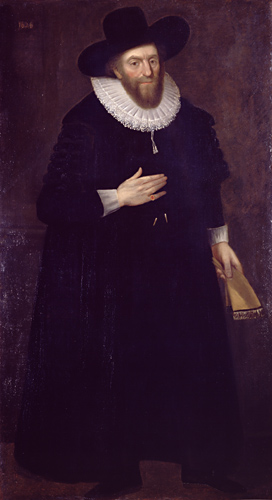
A detail of a 16th century portrait of Sir Francis Walsingham, whom Queen Elizabeth called her "moor", due to his swarthy complexion. Picture acquired through Wikimedia Commons. Image public domain.

In the meantime, to learn more about Walsingham's life and work, please read:

Her Majesty's Spymaster: Elizabeth I, Sir Francis Walsingham, and the Birth of Modern Espionage by Stephen Budiansky.

Mr. Budiansky is an author who specializes in military and intelligence history. We own this book and highly recommend it!