Showing posts with label Theatre Thursday. Show all posts

Thursday, May 18, 2017

Theatre Thursday: A Review of 'King Elizabeth'


Advertisement for the Gamm Theatre's production of 'King Elizabeth'. © Gamm Theatre
This week, I went to see a play at the Gamm Theatre, centered on the rivalry between Mary, Queen of Scots and Elizabeth I. The play was called King Elizabeth, a new version of Friedrich Schiller's Mary Stuart, which was adapted and directed by Tony Estrella. Previously, I had seen Howard Brenton's fantastic Anne Boleyn play at the theatre, and had had the privilege of interviewing the director of the play for this blog. I already knew the theatre did good work and had an interest in representing powerful Tudor women on their stage. The show did not disappoint.

Many of the most familiar faces of the Elizabethan court were present in the cast of characters, and each character was brought to life by a gifted actor or actress. The show did make some interesting choices when casting their roles, like having Master Davison, the man Elizabeth entrusted with the signed death warrant of Mary, Queen of Scots, portrayed by a woman. As the characters in King Elizabeth all wore modern clothes, this gender reversal did not seem inappropriate, although it would have been inaccurate to have a woman serve as a personal secretary in the sixteenth century.

As a historian, I relished all of the historical details included in the script, and was delighted to find that real quotes said by Queen Elizabeth I were included in the dialogue, as were the contents of real letters written by Mary, Queen of Scots. These details gave the show credibility, and added to the emotionally compelling scenes. 

History tells us that Queen Elizabeth I never met her cousin, Mary Stuart, face-to-face, although they did write many letters to one another throughout their lifetimes. But King Elizabeth, like so many other movies and shows examining the rivalry of these two great queens, shows us what might have passed between them, if they ever had the opportunity to meet in secret. The confrontational scene in King Elizabeth takes place when Mary, Queen of Scots is given access to the grounds outside of her jailer Amyas Paulet's home, just as Elizabeth I's hunting party is passing through. Here, the two queens face one another in the woods. Where Queen Elizabeth is level-headed and unforgiving, Mary is defiant and hysterical. Their differing personalities make for an electrifying clash on stage.

A picture of the stage. © BeingBess/A.Jensen

Overall, I enjoyed the play. But there were some things that bothered me, because they were either inaccurate or confusing. 

The modern costuming used in the play didn't add any special significance to the story adaptation. The men were dressed in either modern military wear or formal wear, while Elizabeth I wore power suits. If the ensemble was trying to send a message to the audience through their modern clothing, it was unclear to me what that message might have been. Oddly, Elizabeth finally did don a period dress when she addressed the troops at Tilbury at the end, but the play failed to explain why the Spanish Armada was invading England and who Elizabeth I was addressing in her speech. If you didn't know your Elizabethan history, you might have left the theatre feeling confused by this scene.

Although the Babington Plot is mentioned at the beginning of the play, it is never explained how Mary Stuart was involved with the conspirators, sending them damning letters snuck out of her place of imprisonment in wine barrels. Because it is not explained how complicit she was in authorizing the plans, it appears to an audience that may not know enough background, that Mary is innocent and unjustly imprisoned. Instead of having the portrayals of the two queens more balanced in this adaptation, as was apparently the goal with the re-write, Mary Stuart is portrayed once again as a tragic victim, as she was in Schiller's version of the play.

Finally, the most jarring inaccuracy that stuck out is that the theatre used a picture of Queen Mary I to represent Mary, Queen of Scots on the stage. This was the first thing I noticed when I walked into the little black-box theatre, and the last thing I saw on my way out, and it really bothered me!

If you have an opportunity to see King Elizabeth, I hope that you do. It covers a fascinating period in history, and there is nothing quite like being able to be a fly on the wall, watching the show-down between these two queenly cousins, Elizabeth Tudor and Mary Stuart.

Thursday, February 28, 2013

Theatre Thursday: Shakespeare, Marlowe and "Dueling Divas"

A portrait of a young man, generally thought to be the Elizabethan playwright Christopher Marlowe. Picture acquired through Wikimedia Commons. Image public domain.

For this Theatre Thursday, I bring you links to articles from around the web concerning Elizabethan Theatre and Elizabethan figures in theatre:

Shakespeare For The "Elizabethan Impaired" Offered At The English Rose

Dueling Divas in Donizetti's 'Maria Stuarda' 

The Baptism of Marlowe (Feb 26th)


Thursday, February 21, 2013

Theatre Thursday: A Review of Brenton's 'Anne Boleyn' (Part 1)

The playbill for The Gamm Theatre's production of Anne Boleyn. Image uploaded to ExperiencePawtucket.


~This is part 1 of a two-part post focusing on the first U.S. production of Howard Brenton's exciting new play 'Anne Boleyn'; today's post reviews the play itself, while tomorrow's post will feature an exclusive interview with Rachel Walshe, the director of Anne Boleyn at The Gamm Theatre.~

On Sunday, February 17th I attended a performance of British playwright Howard Brenton's 'Anne Boleyn'. Anne Boleyn had originally been commissioned for the recreated Globe Theatre in London, where it had a very successful run, premiering in July of 2010. It starred Miranda Raison and was directed by John Dove. I followed the play through articles and reviews online, hoping that it would make its way "across the pond" to America so that I could see it. Luckily, Anne Boleyn made its U.S. debut in Pawtucket, Rhode Island, which is within driving distance of where I live. My mother, ever-obliging of my Tudor interests since I was a young, (seemingly strange) child, joined me. I wrote to the Gamm Theatre in advance, requesting an interview with the director, Rachel Walshe, for my blog. I was delighted when Ms. Walshe wrote back, granting me an interview after the show.

The historic Sandra Feinstein-Gamm Theatre in Pawtucket, Rhode Island. I was delighted to discover that The Gamm Theatre looked like a brownstone castle; how appropriate for a production of Anne Boleyn! Photo by Ashlie R. Jensen, 2013.

Anne Boleyn has been having a moment...for hundreds of years! She has been the subject of countless books, and has been portrayed in film and television, theatre and literature, and has inspired dramatic music and art; she has even been reincarnated in doll and action figure form! But Brenton's two-act play is unique amongst them all in that it highlights Anne Boleyn's role in religious reform in England, rather than solely focusing on her romantic relationship with Henry VIII. The play, like any piece of art, takes certain historic liberties, the most glaringly obvious being that it suggests that Anne Boleyn had a personal relationship with William Tyndale, whom she met periodically in the forest to discuss religion. Untrue as this may be, it serves as a plot device to illustrate Anne Boleyn's interest in reformist ideas, which we know that she, her father and her brother all had. And, despite Anne being referred to as a Protestant in the play, we know that she would not have thought of herself as such, being that the term was not yet in use, and that she died within the Catholic faith.

Despite these minor issues, and a few other questionable references that we have no evidence to support (like Thomas More torturing Protestants in his house with a portable rack), Brenton's script as well as The Gamm Theatre's staging of it was phenomenal. It was both thought-provoking as well as entertaining, a difficult balance to achieve with a historical piece. 

The play opens with Anne Boleyn, enigmatically portrayed by Madeleine Lambert, boldly addressing the audience, holding a bag and asking us if we want to see what is inside. The bag holds both her head and her personal copy of William Tyndale's translation of the Bible. Shortly thereafter we travel to the court of James I, who has recently succeeded to the throne of England. Robert Cecil (acted by Sam Babbitt with the dry wit characteristic of the Cecil's) looks on as his new sovereign, played by Tony Estrella, rummages through the possessions of Queen Elizabeth I: her 2,000 dresses, in particular, fascinate the notoriously frumpy James! In the Gamm Theatre's staging, the dresses of Queen Elizabeth were suspended from the ceiling of the tiny Black-box theatre. 

Me, wearing my replica chequers ring and my great-grandmother's church gloves, on The Gamm Theatre set for Anne Boleyn after the show. Photo by L. Jensen 2013.

A curious chest is brought forth that, when opened, reveals the coronation gown of "the concubine", our heroine Anne Boleyn. Therefore, Brenton is implying that Queen Elizabeth secretly kept some of her mother's personal possessions (and the evidence suggests that, if she had access to them, she probably did). King James becomes excited like a little school boy, and continues examining the box; in doing so, he uncovers a secret compartment that reveals Anne's personal copy of William Tyndale's Bible, with her notes scrawled in the margins. I found this to be an accurate touch, as Anne and Henry VIII exchanged notes in the margins of books that they would pass back and forth to one another. James voices aloud his wish to know Anne's story; we are then transported back into the court of King Henry VIII, where we see Anne's story unfold.

Throughout the play, the audience travels back and forth between the sumptuous, scandalous court of King Henry VIII, and the stark, sober court of James I, who is tying to appease the religious parties in England: the Anglicans, the Puritans, the Presbytrians, and the Catholics, while also retaining his position as the Head of the Church of England. And what is the best way to achieve this? By creating a new Bible, of course, which will support the Divine Right of Kings, but also incorporate phrasing and doctrine from the different religious sects. The result is to be, of course, the King James Bible (first published in 1611). This part of the play is masterfully written. Act Two, Scene One in particular stands out, where James brings forth Dean Lancelot Andrewes, Doctor John Reynolds and Henry Barrow to discuss the points of religion where they differ: baptism and original sin, the structure of the Church, atlar rails, and the "big, black and monstrous, elephant-size" word in the room, 'Presbyterianism'.  In Act Two, Scene Six, James asks Dean Andrewes and Doctor Reynolds how they would translate 3 Greek words for the new edition of the Bible, 'Ecclesia', 'Presbyteros', and 'Agape'. Naturally, the two scholars come up with entirely different answers, illuminating the issues of translation and making it all the more remarkable that the different committees assigned to create the authorized version of the Bible were able to put together a cohesive document.


Brenton's confident and sensuous Anne will seem familiar to those who study and admire her, but it is truly a revelation to see her portrayed as a convicted champion of reform on stage. As the official description of Brenton's play claims, "Anne was a religious conspirator, in love with Henry VIII but also with the most dangerous ideas of her day." Anne sees her relationship with King Henry VIII as God's will; Henry VIII is supposed to divorce his Catholic "cow" of a wife, marry Anne, and usher in a new, Protestant England. Like the real Anne, Brenton's version is prone to outbursts, and alienates those around her who had supported her in the past, notably Cromwell. In a startling omission, Thomas Cranmer is not included as a character in the play; since Anne Boleyn centers around Anne's role in religion in England, it seemed strange to me that Anne Boleyn's personal chaplain and friend was nowhere to be found.

Anne Boleyn and King Henry VIII Shooting Deer in Windsor Forest, by William Powell Frith, 1903. Picture acquired through Wikimedia Commons. Image public domain.
   
Most historians are in agreement that Anne Boleyn and Henry VIII first sexually consummated their relationship during their visit to Calais, France, and Brenton follows this consensus. The intermission begins exactly when they are about to get into bed together, though the script gives no official stage direction as to how to announce the intermission. The Gamm Theatre came up with a rather amusing way; they had Henry and Anne engage in a steamy embrace, having Anne briefly break away and turn her head to  the audience, saying, "And we will now break for a 15 minute interval" followed by a mischievous wink!

In the Second Act, Anne's story resumes after her coronation and the birth of her daughter, Elizabeth; a feverish Anne is concerned over the gender of her child, and is seen sitting on the ground, clutching her coronation robes like they are an infant. Henry approaches her, and Anne asks him, "Have you come to take it away?" Henry responds, "Take away what, my love?" Anne says matter-of-factly, "My dress". "Why should I do that?" Henry asks her. Anne responds, "Because I was made Queen in it. And now they won't let me be Queen any more." Anne is obviously foreshadowing her own fate. Brenton's Henry is extremely kind (perhaps too kind in this moment) and understanding. Henry, played by Steven Kidd, declares, "We are still young", a version of the famous quote where Henry declares that he and Anne are both young, and sons will soon follow.

In the end of the play, it is Cromwell who is the architect of Anne Boleyn's fall, not Henry VIII. According to Brenton's version, Queen Anne had discovered that Cromwell had been illegally lining his pockets, and those of his relatives with money and property from the dissolution of the monasteries. Because she was going to reveal this information to Henry, Cromwell had to act fast in order to destroy her first. Of course, the fall of Anne Boleyn is a far more complex matter, but in a two act play, the audience must be given a simple explanation in order to expedite us to the execution. 

Jane Rochford, played by Casey Seymour-Kim, has a prominent role throughout the play as Anne's friend (as she was in real life, for a time) and is in the room when Anne is arrested; she hurriedly explains to Anne that she testified against her to save her own life. This plot-twist is believable because Brenton has written Jane as a woman who is mistreated and threatened with violence by various men throughout the play; this gives us a reason to believe that she could be so easily swayed by the threat of rope torture at the hands of Cromwell. 

When Anne is arrested, she demands to see Henry, and is carried off stage screaming her husband's name. Seeing the once-proud Anne reduced to a state of terror in theatre and cinema always brings tears to my eyes, and this production was no exception. 

Anne Boleyn is Condemned to Death, a 19th century painting by Pierre Nolasque Bergeret. Picture from Inor19 on Flickr.

Henry VIII begins his relationship with Jane Seymour toward the end of the play, and Cromwell warns Jane not to discuss matters of religion or state with Henry, instead advising her to "Let him lie on your bosoms, not your opinions."  At the end of the play, Anne addresses the audience as she did at the beginning; she calls the audience "demons", for she cannot tell what they believe. 

ANNE: Dear demons of the future, what I can't tell...what I can't tell is what you believe. You're so strange to me, as i must be strange to you. But...but...beware of love. No, don't! We must all die, so die greatly, for a better world, for love.

Brenton's Anne never regrets her love of King Henry VIII or of reform. The real Anne probably didn't, either. 

I bought a copy of the extraordinary Anne Boleyn script after the show. I was pleased to see that the official "Shakespeare's Globe" seal was right on the cover! The direction and the acting of The Gamm Theatre production were as impressive as the script. And, it should be mentioned that the dialect coach did a stupendous job in helping the actors master distinct accents from different parts of England, as well as teaching an understandable Scottish brogue to Tony Estrella, who played James I. Estrella is also the artistic director of The Gamm. As I would find out later from the director, a previous performance had included a "row of Brits" who believed that the actress who played Anne Boleyn was actually English. This, it should go without saying, is high praise!

Following the play was the third in a series of "TalkBacks", a panel-led discussion relating to the history of Brenton's play. This particular session was about the creation of the King James Bible, and featured an engaging and knowledgeable scholar in Reformation studies, Jeannine Olson. Professor Olson could rattle off the dates and the history of the Reformation and the creation of different Bibles at rapid speed. My mother turned to me and said, "I think that I am seeing you in the future." 

Thank you, Mom, I certainly hope so!


The "TalkBack" panel, which followed the February 17th production of Anne Boleyn at The Gamm Theatre. Second from the left is artistic director and actor Tony Estrella, followed by Professor Olson and director Rachel Walshe. Photo by Ashlie R. Jensen 2013.
Dear readers, have you seen a production of Howard Brenton's Anne Boleyn? If so, what were you opinions? 

Visit BeingBess tomorrow for part two of our post focusing on Anne Boleyn, featuring an exclusive interview with the director, Ms. Rachel Walshe.

Thursday, January 3, 2013

Theatre Thursday: The Star of 'Maria Stuarda' Speaks

A portrait of Mary, Queen of Scots, circa 1565. The Blairs Museum. Image public domain.

For the first Theatre Thursday of the new year, I bring you an interview with the star of Donizetti's tragic opera, 'Maria Stuarda', mezzo-soprano Joyce DiDonato. The interview examines the history behind the script, Italian censorship, and the strict regimen of a professional opera singer. For those who are not lucky enough to see the show in person, 'Maria Stuarda' will be broadcast live in HD on January 19th.

Thursday, December 27, 2012

Theatre Thursday: Winter in Love's Labour's Lost

Edwinsford Manor in winter; Edwinsford was built in the 16th and 17th centuries. Picture acquired through Wikimedia Commons. Photo shared for public use by Anthony Gostling.

"When icicles hang by the wall,
And Dick the Sheperd blows his nail,
And Tom bears logs into the hall,
And milk comes frozen home in pail..."

-Winter in Love's Labour's Lost

A comedy, Shakespeare's Love's Labour's Lost was first published in 1598, though it was most likely written in the mid 1590's. Around this same time, Shakespeare also composed two of his more popular plays, the comedy A Midsummer Night's Dream and the tragedy Romeo and Juliet.

Stay warm, dear BeingBess readers!

Semper Eadem,

Ashlie

Thursday, December 13, 2012

Theatre Thursday: Shakespeare's Globe Sets 2014 Date

 The reconstructed Globe Theatre along the Thames. Picture acquired through Wikimedia Commons. Image public domain.

Shakespeare's reconstructed Globe Theatre has set a 2014 date for the opening of their new indoor theatre space. To read more about the Jacobean-style construction and what lies ahead for the theatre, view The New York Times article here.

Thursday, November 15, 2012

Theatre Thursday: Tudor History, Italian Style!

"Anne Boleyn receiving proof of Henry VIII's passion for Jane Seymour", a 19th century engraving from the novel Windsor Castle. Image courtesy of Inor19 on Flickr.

In past Theatre Thursday features I have included several article links concerning productions of the tragic Italian opera, 'Anna Bolena'. As someone who once performed in Carmina Burana as a child, I really would love to see this operatic production, if it ever comes to my part of the country.

Anna Bolena is the last of Gaetano Donizetti's "Tudor trilogy". His other Tudor themed operas are (unsurprisingly) also tragedies, 'Roberto Devereux' and 'Maria Stuarda'.

Anna Bolena, Giovanna Seymour, and Enrico VIII take the stage in, 'Anna Bolena' !


Thursday, November 8, 2012

Theatre Thursday: Upcoming Lecture on the Bad Boys of Elizabethan Theatre

Dr. Andy Kesson, a writer, teacher, occasional director & historian at the University of Kent & The Globe Theatre, alerted me to his upcoming lecture at the Globe on December 10th at 6 pm. The lecture will be nothing short of exciting, since Dr. Kesson will be discussing the "bad boys" of Elizabethan theatre! 

A 16th century portrait of a man, likely the playwright Christopher Marlowe, who is one of the more famous "bad boys" of Elizabethan theatre. Picture acquired through Wikimedia Commons. Image public domain.

Dr. Kesson's work on John Lyly and Early Modern Authorship & The Elizabethan Top Ten will be available to the public in 2013.

There are also other educational lectures and seminars to look forward to at The Globe this holiday season; if you are in the London area, you should certainly check them out!

A photo of the reconstructed Globe Theatre along the Thames in London. Picture acquired through Wikimedia Commons. Image public domain.

Thursday, October 18, 2012

Theatre Thursday: East Yorkshire Schoolchildren Re-enact the Pilgrimage of Grace

The Pilgrimage of Grace, 1536, by Fred Kirk Shaw, 1913. Picture acquired through Wikimedia Commons. Image public domain.

I love when theatre is used as teaching tool; theatre as education is particularly effective with young children. This is why I use first-person historical interpretation myself to teach others about Queen Elizabeth I and the Elizabethan era. 

In East Yorkshire, young schoolchildren who have been learning about the Tudor period in England demonstrated their newly acquired knowledge by re-enacting the Pilgrimage of Grace, the northern rebellion during the reign of King Henry VIII (1536) in which many of their ancestors took part. Read more about his unique educational experience, directly from the children who experienced it, here.

Thursday, October 11, 2012

Theatre Thursday: Shakespeare Exhibit, Improv, and The History of the Reconstructed Globe Theatre

Today for Theatre Thursday I bring you more important links related to Elizabethan Theatre from around the web!

The reconstructed Globe Theatre in London. Picture acquired through Wikimedia Commons. Image public domain.

See a Play as Shakespeare Would've Staged It: The History of the Reconstructed Globe Theatre

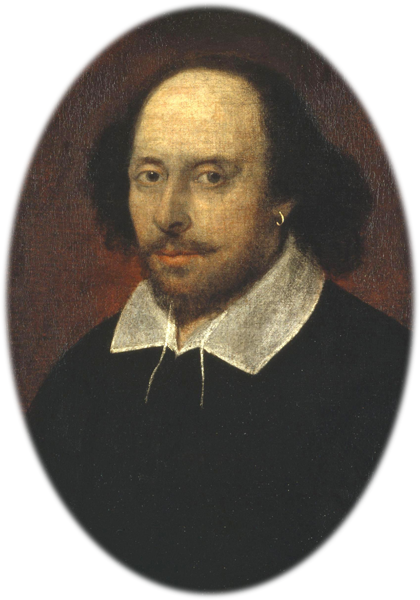
A cameo version of the Chandos Portrait of William Shakespeare. Picture acquired through Wikimedia Commons. Image public domain.

Shakespeare Puts All the World on Stage: Staging the World Exhibit at The British Museum


Thursday, October 4, 2012

'I, Elizabeth' Play Continues to Earn Praise

Rebecca Vaughn in I, Elizabeth. Photo from the Berwick Advertiser Online.

Several months ago, I reported on the exciting one-woman play I, Elizabeth, created by and starring actress Rebecca Vaughn. Using original source material, Vaughn's script "delves deeper into the struggles and inner demons of a woman who to many seemed untouchable but at times was like a graceful swan on the surface but a frightened cygnet paddling away underneath."  

The play has been praised by critics and audiences alike; it was recently brought to The Maltings in Berwick by Dyad Productions. 

A new article in 'The Guide' of the Berwick Advertiser delves into Vaughn's inspiration for the show, and her creative process. The insightful article concludes with Vaughn's lament, "...I think saying goodbye to Elizabeth will prove very hard for me.”

While all shows must come to an end, I have no doubt that Vaughn will never leave the captivating Queen Elizabeth I behind completely!

Thursday, September 27, 2012

Theatre Thursday: Mirren Takes to the Stage, 'Anna Bolena' and more

A 2007 photo of Dame Helen Mirren at the Orange British Academy Film Awards in London's Royal Opera House. Picture acquired through Wikimedia Commons, courtesy of the photographer Caroline Bonarde Ucci.

There is a lot happening this week in Elizabethan and Tudor-themed theatre! As I continue to polish tomorrow's article for Feature Friday, the first in my Elizabethan Power Couples series, I bring you links from around the web to peruse at your leisure. Of course, the biggest news, which you have most likely already heard, is that Dame Helen Mirren is set to play Queen Elizabeth II once more, this time, on the stage. The accomplished Mirren will be playing Her Majesty from the age of 25 until her 80's! Now if only we could get a reprisal of Mirren as Elizabeth I....

Helen Mirren Set to Reign on the Stage

'Anna Bolena': Experiencing Henry VIII's World Through Tragic Opera

Shakespeare's Globe Theatre Offers 3 Plays at Cinemas

Old Pros to Perform 'Twelfth Night' 

Thursday, September 20, 2012

Theatre Thursday: "Queen Elizabeth" Play Revived

A 16th century portrait of Queen Elizabeth I, after the style of Lucas de Heere. In the Borough of Windsor and Maidenhead Civic Collection. Picture acquired through Wikimedia Commons. Image public domain.

The Winding River Players are presenting a revival of the play "Queen Elizabeth" by Paolo Giacometti. You can read more about the play, the actor's experience portraying historical characters, and view a photo of the cast at The Daily Review.com.

Thursday, September 13, 2012

Theatre Thursday: Queen Elizabeth I and Mary, Queen of Scots Share the Stage (Again)

Today for Theatre Thursday, I bring you an article from the Edmonton Journal, concerning the eternal rivalry of Queen Elizabeth I of England and Mary Stuart, Queen of Scots.

A miniature of Queen Elizabeth I by Nicholas Hilliard,  circa 1586. Picture acquired through Wikimedia Commons. Image public domain.


 Their lives have once again been adapted onto the stage, this time by a female playwright, Annette Loiselle.

A miniature of Mary, the deposed Queen of Scots, done by Hilliard during her captivity in England, circa 1586.
Picture acquired through Wikimedia Commons. Image public domain.

This article discusses not only Loiselle's new play, The Passion of Mary, but also how history buffs find themselves on either, "Team Elizabeth" or "Team Mary" (I think it goes without saying which team I am on!). Loiselle also hopes modern audiences will compare and contrast modern female political leaders with Queen Elizabeth and Mary, Queen of Scots.

Read Dramatic Women on the Political Stage.

Thursday, September 6, 2012

Theatre Thursday: Current Interpretations of Elizabethan Theatre

A cameo detail of the Chandos Portrait of William Shakespeare. Picture acquired through Wikimedia Commons. Image public domain.

Today for Theatre Thurday, I bring you links to two articles on current interpretations/productions of Elizabethan theatre. 

Enjoy!


Thursday, August 30, 2012

Theatre Thursday: Back to School in "As You Like It"

"Rosalind Gives Orlando a Chain"; a 19th century illustration by Emile Bayard from Shakespeare's As You Like It. Picture acquired through Wikimedia Commons. Image public domain.

To commemorate "back to school" time for children and adults continuing their education around the world, I bring you a quote concerning a reluctant schoolboy from Shakespeare.

"And then the whining schoolboy with his satchel, and shining morning face, creeping like a snail unwillingly to school. "
-Jacques, As You Like It

Coincidentally, The Globe Theatre (currently on tour) is performing As You Like It. They will also be doing a special showing of the play at Penrhyn Castle, only on Sept 1st.

This month I will begin working toward my Masters in History; my first course will be about The Wars of the Roses, and I am very much looking forward to it!

Thursday, August 23, 2012

Theatre Thursday: Publishing in Elizabethan England, and Other Topics

The title page of Shakespeare's First Folio, first published in 1623. Picture acquired through Wikimedia Commons. Image public domain.

Today for Theatre Thursday I bring you a selection of a few interesting and informative articles on Shakespeare Online.  

Shakespeare Online if a content-rich site focused on the Shakespeare canon, and the the world of Elizabethan actors and the theatre-going public. All of the articles reproduced have been previously published in literary or historical journals, and are fully annotated.

Enjoy!


Thursday, August 9, 2012

Theatre Thurs: John of Gaunt's Description of England in Richard II

A portrait of 14th century Prince John of Gaunt, painted circa 1593 for Sir Edward Hoby of Queensborough Castle, Kent. This portrait currently resides in the collection of a descendant of John of Gaunt and his third wife, Katherine Swynford,  the Duke of Beaufort. In addition to being the Duke of the vast and agriculturally rich duchy of Lancaster,  John of Gaunt was the titular King of Castile and Leon, (through his second wife) and Duke of Aquitaine, Earl of Derby, Leicester and Lincoln, and Seneschal of England. Picture acquired through Wikimedia Commons. Image public domain.

One of my favorite historical personages, John of Gaunt, Duke of Lancaster (14th century), was immortalized in Shakespeare's tragedy Richard II. In the play, Gaunt delivers one of the most famous descriptions of England in literature, in Act 2, Scene 1.

This royal throne of kings, this scepter'd isle,
This earth of majesty, this seat of Mars,
This other Eden, demi-paradise,
This fortress built by Nature for herself
Against infection and the hand of war,
This happy breed of men, this little world,
This precious stone set in the silver sea,
Which serves it in the office of a wall,
Or as a moat defensive to a house,
Against the envy of less happier lands,
This blessed plot, this earth, this realm, this England,
This nurse, this teeming womb of royal kings,
Fear'd by their breed and famous by their birth,
Renowned for their deeds as far from home,...
...This land of such dear souls, this dear dear land,
Dear for her reputation through the world,
Is now leased out, I die pronouncing it,
Like to a tenement or pelting farm:
England, bound in with the triumphant sea
Whose rocky shore beats back the envious siege
Of watery Neptune, is now bound in with shame,
With inky blots and rotten parchment bonds:
That England, that was wont to conquer others,
Hath made a shameful conquest of itself.
Ah, would the scandal vanish with my life,
How happy then were my ensuing death! 

The ruins of Kenilworth Castle. Picture acquired through Wikimedia Commons courtesy of Dave. Image public domain.

Interestingly, Kenilworth Castle, which Queen Elizabeth I gave to her life-long favorite Robert Dudley, the Earl of Leicester in 1563, was previously in the possession of John of Gaunt.

Thursday, August 2, 2012

Theatre Thursday: The Closing of the Playhouses

The city of London from Southwark in Elizabethan times. Picture acquired through Wikimedia Commons. Image public domain.

Between 1592-93, plague carried by fleas caused the deaths of about 12,000 Londoners. The playhouses closed down to prevent the spread of disease. Thespians had to tour the countryside, looking for work. To the excitement of the theatre-going English people, the theatre's re-opened in 1594.

The modern reconstruction of the famous Globe Theatre in London. Picture acquired through Wikimedia Commons. Image public domain.

Thursday, July 5, 2012

Theatre Thurs: Cut-purses in the Elizabethan Theatre District

Market Scene with a Pick-pocket by Louise Moillon, (1610-1696) from the first half of the 17th century (a little late in time, I know, but it was a brilliant representation and I wanted to use it!) Picture acquired through Wikimedia Commons. Image public domain.

Like any major city today, 16th century London had its fair share of crime. Elizabethan London was full of cut-purses, many of whom worked in organized bands. 

In the year 1585, it was discovered that a school to train young cut-purses was being run at a tavern in Billingsgate. The school was being run by a Mr. Wotton, an ex-merchant turned criminal mentor (think of him as a 16th century Fagan).

One of the ways Mr. Wotton honed his aspiring criminals skills was by having them practice lifting coins from a purse that had bells sewn onto it, without ever making a sound. When the junior cut-purses could do this successfully, they were ready to be released into the wider world, preying upon wealthy theatregoers in the playhouses. These boys "nipped a bung" in the city, which was criminal slang for cutting a purse.

The City of London from Southwark in Elizabethan Times. The drawing is from the second edition of The History of London (1894) by Sir Walter Besant. Picture acquired through Wikimedia Commons. Image public domain.

Mr. Wotton, like the other men (and women) who trained bands or criminals, found that small boys made good cut-purses because they could move through the packed crowds in and around the theatre virtually unnoticed. As an added bonus, their small fingers caused minimal to no disturbances when pilfering coins or cutting purse strings!